
How to Read a Bourbon Label (Mashbill, Age, Proof, and More Explained)
Introduction: Why Bourbon Labels Matter
If you’ve ever stood in a liquor store staring at rows of bourbon, you know how confusing it can be. Words like small batch, bottled-in-bond, single barrel, high rye, straight bourbon—what do they all mean? Are they just marketing buzzwords, or do they actually tell you something about the whiskey inside the bottle?
For beginners (and even seasoned enthusiasts), understanding a bourbon label is the first step toward buying bottles you’ll actually enjoy. This guide will break down every term you’re likely to encounter—from mashbill to age statements to proof—so you can make informed choices and avoid falling for marketing tricks.
By the end, you’ll know how to read any bourbon label with confidence, spot quality, and understand why some bottles command higher prices than others.
What Information Is Required on a Bourbon Label?
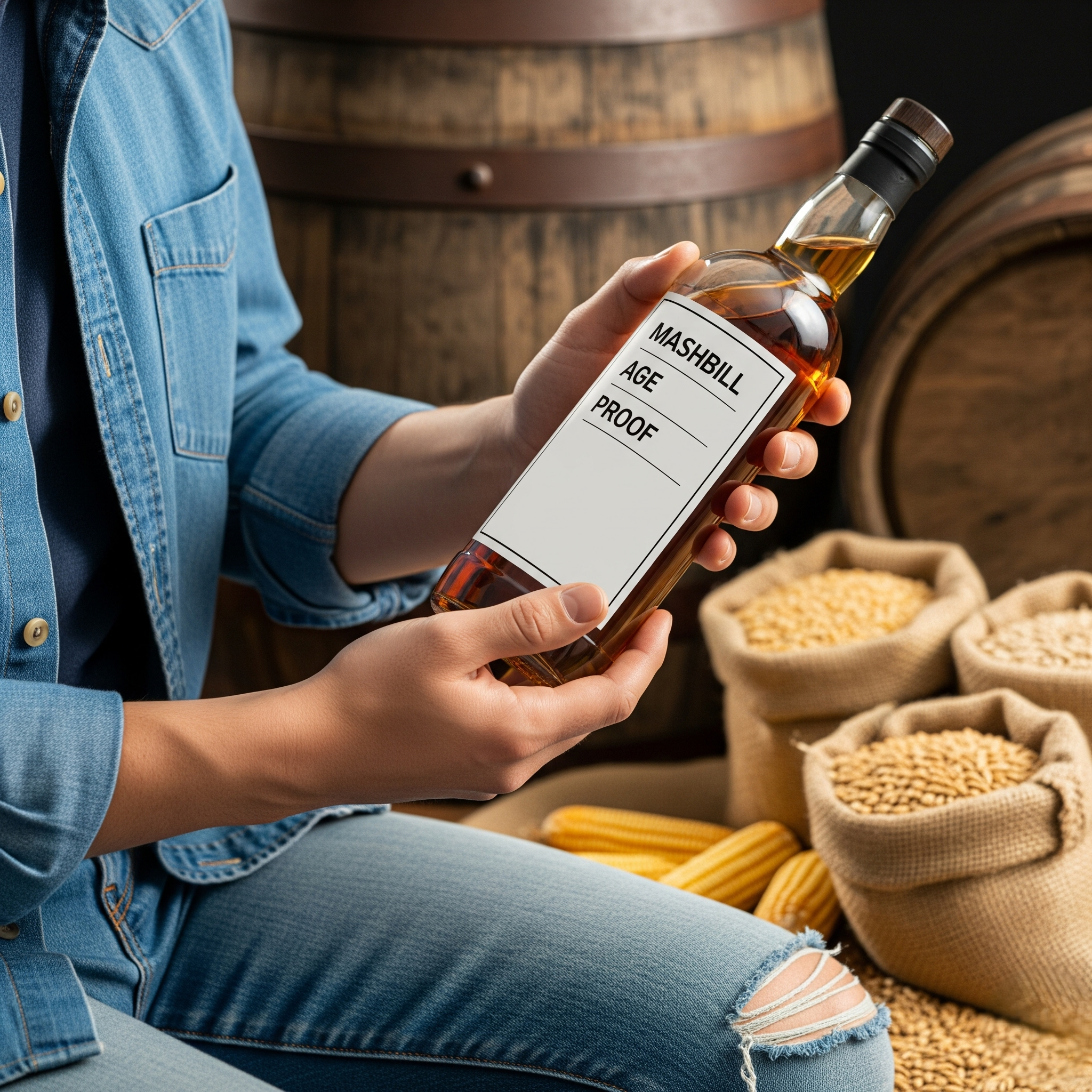
Before we get into the details, let’s talk about what must legally appear on every bourbon label. According to the U.S. Alcohol and Tobacco Tax and Trade Bureau (TTB), every bottle of bourbon must display:
- Brand name (distiller or company name).
- Class/type (e.g., Straight Bourbon Whiskey).
- Alcohol content (ABV or proof).
- Net contents (typically 750mL in the U.S.).
- Name and address of bottler/distiller (though it doesn’t have to be where it was actually distilled).
Everything else—like “small batch” or “reserve”—is optional marketing language. Understanding the required vs. optional terms is the key to avoiding hype.
Key Bourbon Label Terms Explained
 1. Mashbill: What’s in the Recipe?
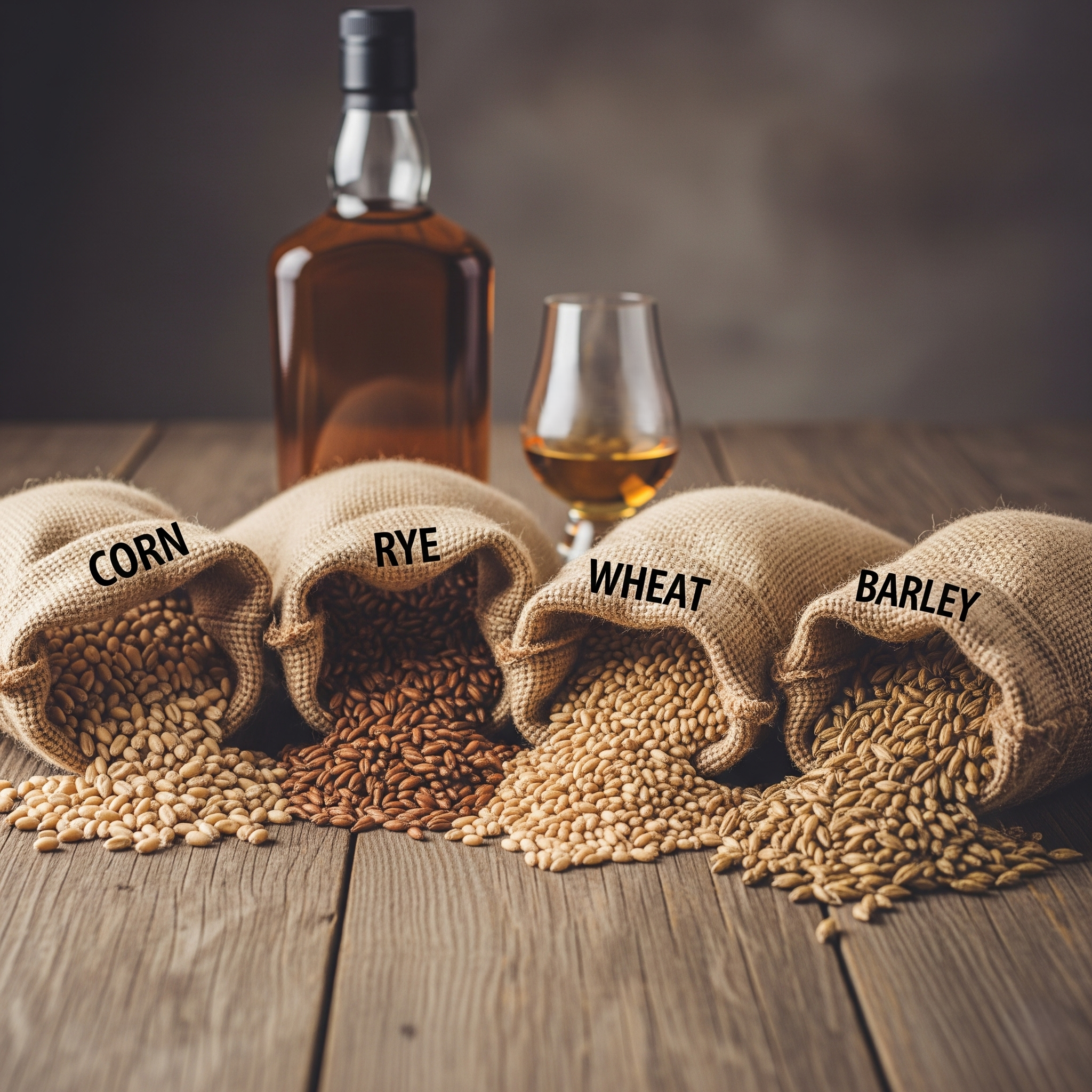
The mashbill is the recipe of grains used to make the bourbon. By law, bourbon must be at least 51% corn, but the remaining 49% can be a mix of rye, malted barley, or wheat.
- Traditional Bourbon: Usually 70–80% corn, with rye as the second grain. Think Buffalo Trace or Maker’s Mark (before the wheated swap).
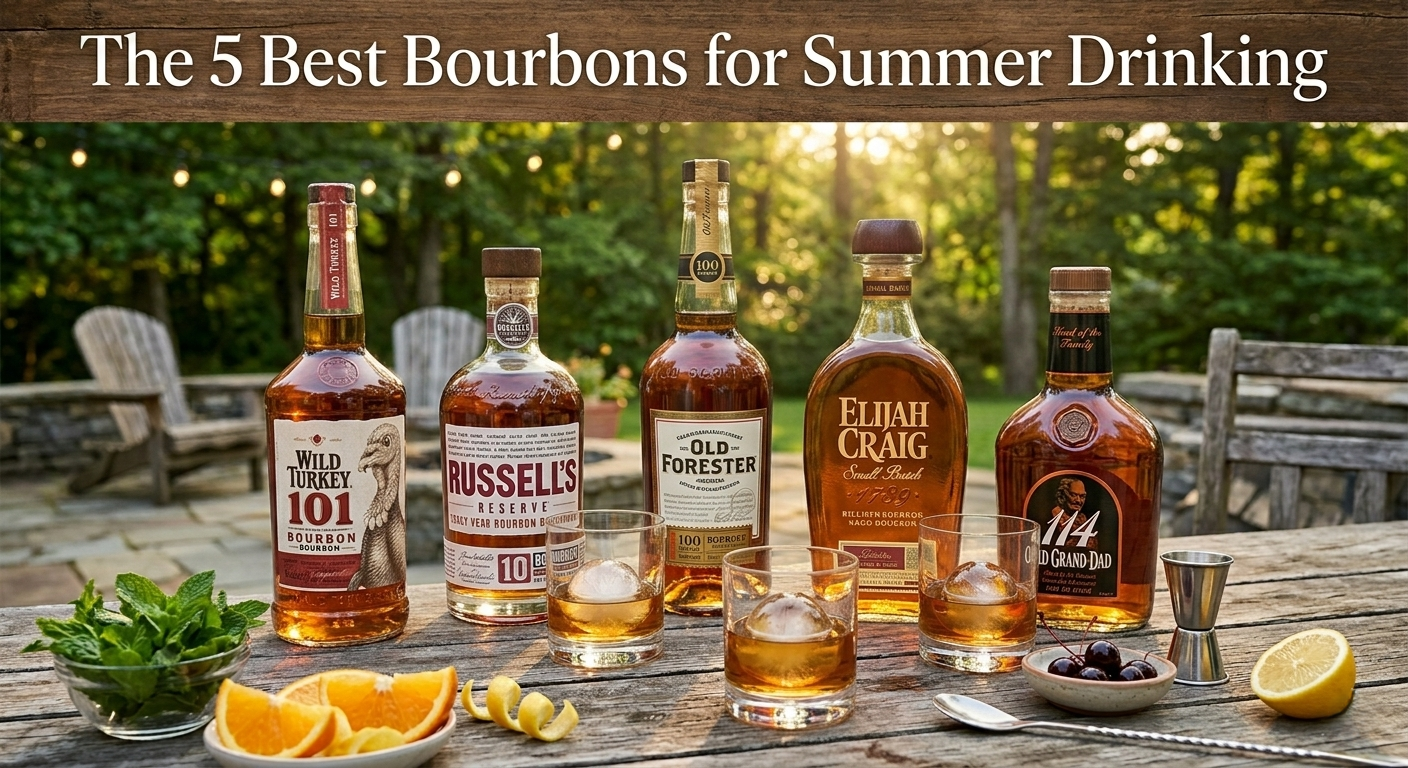
- High-Rye Bourbon: 20–35% rye, giving more spice and dryness. Examples: Bulleit Bourbon, Old Grand-Dad.
- Wheated Bourbon: Uses wheat instead of rye for a softer, sweeter profile. Examples: Maker’s Mark, Weller, Pappy Van Winkle.
Most labels won’t print exact mashbill percentages, but they often mention “high rye” or “wheated” to signal flavor profile. Enthusiasts often research mashbills because they help predict the taste.
If you want to dive deeper, I’ve put together a complete list of bourbon and whiskey mashbills so you can easily see the grain recipes behind your favorite brands.
2. Age Statements: What They Really Mean
By law, bourbon doesn’t have to list an age—unless it’s under 4 years old. But when you see an age statement, it refers to the youngest whiskey in the bottle (even if older whiskey is blended in).
Key things to know:
- Straight Bourbon means it’s aged at least 2 years.
- If it’s aged less than 4 years, the age must be printed on the label.
- “No Age Statement (NAS)” bourbons are common and can still be excellent, but they’re usually blends of 4–6-year whiskey (unless specified).
Age doesn’t always equal quality. A well-made 6-year bourbon can taste better than a 12-year one, depending on the distillation and barrel treatment.
3. Proof vs. ABV: How Strong Is It?
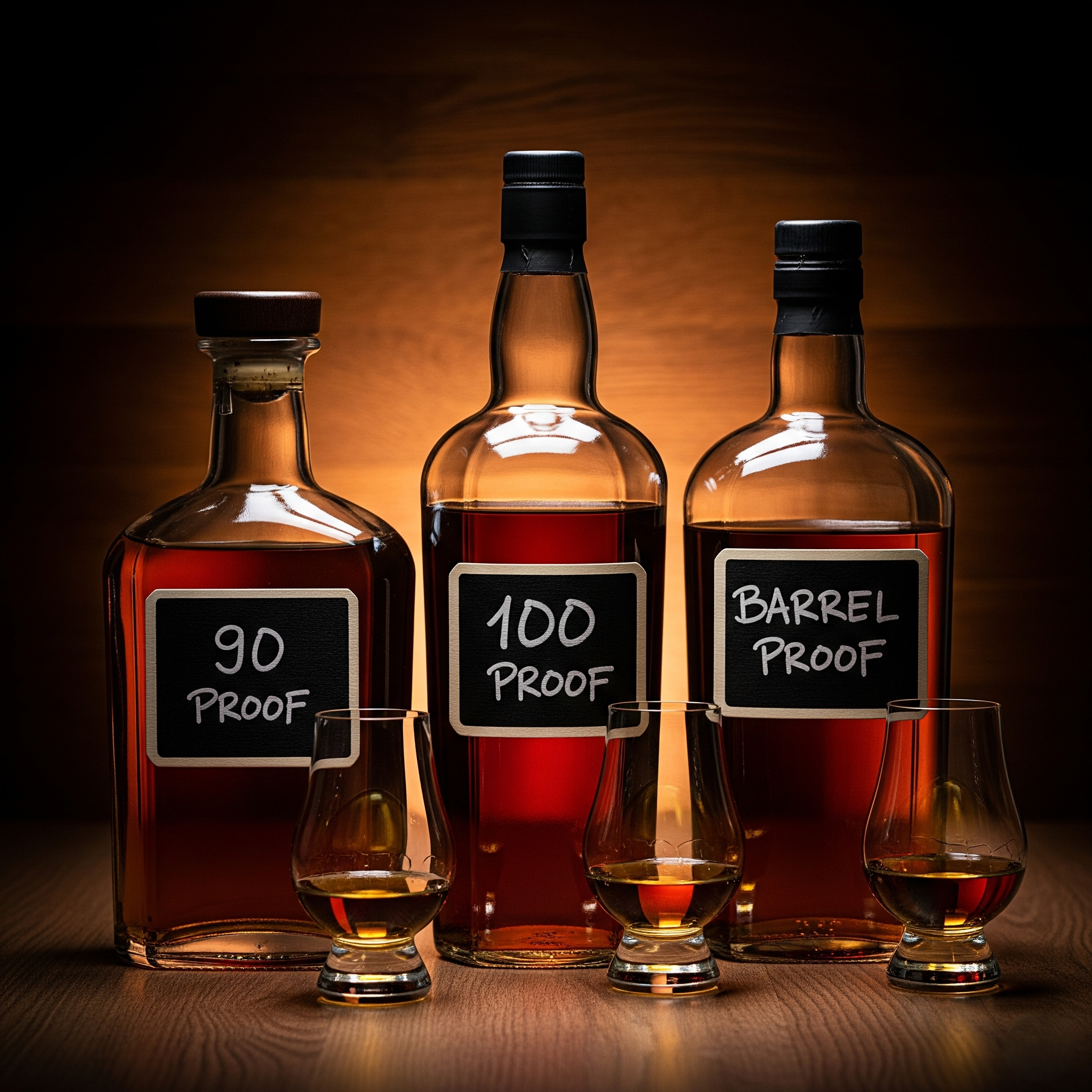 Proof is simply twice the alcohol by volume (ABV). So a bourbon at 50% ABV is labeled as 100 proof.
Common ranges:
- 80 Proof (40% ABV): Standard, lighter bourbons for casual sipping.
- 90–100 Proof: Sweet spot for flavor and balance.
- 110+ Proof (Cask Strength/Barrel Proof): Bottled directly from the barrel with minimal dilution, offering intense flavor but more heat.
Look for “barrel proof” or “cask strength” on labels if you want the full-strength experience.
4. “Straight Bourbon Whiskey”: What Does It Mean?
When a label says “straight bourbon whiskey,” it means:
- Distilled from at least 51% corn.
- Aged a minimum of 2 years in new, charred oak barrels.
- No added colors or flavors (just water to proof it down).
“Straight” is generally a good sign you’re getting a traditional, unadulterated bourbon.
5. Small Batch, Single Barrel, and Other Buzzwords
These aren’t legally defined terms, but they matter for flavor and rarity.
- Small Batch: Typically a blend of a limited number of barrels (anywhere from 10 to a few hundred). Quality varies widely.
- Single Barrel: Each bottle comes from one specific barrel, so no two are exactly alike. Often more expensive, but more unique.
- Reserve, Special, Select: Purely marketing terms—no legal meaning. Doesn’t guarantee quality.
- Bottled-in-Bond: A strict, legally defined term (100 proof, aged at least 4 years, from one distillery and one distilling season). These often offer great value and quality.
6. Distillery and Sourced Whiskey
Not all bourbons are distilled by the company on the label. Some are “sourced” from other distilleries and bottled under a brand name. Look for:
- “Distilled by” vs. “Bottled by” – If it says “bottled by” but not “distilled by,” it’s sourced.
- Many quality brands (like High West or Smoke Wagon) start with sourced whiskey and then blend or finish it, so sourced doesn’t equal bad—it just helps explain price and flavor consistency.
How to Use Labels to Find Bourbon You’ll Actually Like
 Understanding labels isn’t just about geeky knowledge—it helps you avoid buying bottles you won’t enjoy. Here’s how to use the info to your advantage:
- Check the proof – If you’re new, start around 90–100 proof. Barrel proof can be overwhelming.
- Note the mashbill – If you prefer sweeter, softer whiskey, try wheated bourbons. If you like spice, go high-rye.
- Look for Bottled-in-Bond or Straight Bourbon – These usually offer transparency and quality.
- Ignore “Reserve” or “Select” – Marketing terms don’t equal better flavor.
- Research the distillery – A quick search will tell you if it’s sourced and what flavor profile to expect.
Common Marketing Terms (and Whether They Matter)
- “Handcrafted” or “Small Batch” – Often meaningless, but can indicate some attention to detail.
- “Barrel Select” or “Private Reserve” – May mean it’s from a store pick or single barrel, which can be unique.
- “Non-Chill Filtered” – This means the bourbon wasn’t filtered to remove fatty acids, giving a richer mouthfeel and flavor (often preferred by enthusiasts).
Tips for Spotting Value Bourbon
Labels can also reveal great values:
- Bottled-in-Bond options like Evan Williams Bottled-in-Bond and Old Forester 1897 offer big flavor for $20–50.
- NAS bourbons (like Buffalo Trace or Wild Turkey 101) often drink like more expensive bottles.
- High-proof store picks (often single barrel) can offer rare quality for under $70.
Conclusion: Reading Labels Like a Pro
The next time you’re shopping for bourbon, slow down and really read the label. The mashbill, proof, age, and words like “straight” or “bottled-in-bond” can tell you almost everything you need to know about what’s in the bottle—and whether it’s worth your money.
Once you get the hang of it, you’ll be able to choose bottles that fit your taste, skip the marketing fluff, and even discover hidden gems that others overlook.

There are no comments
Leave a Reply
You must be logged in to post a comment.